Slow-Roasted Beef Tenderloin with Shallots and Port Recipe
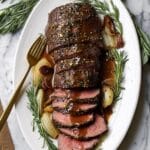
This recipe features a succulent slow-roasted beef tenderloin seasoned with garlic and fresh rosemary, paired with caramelized roasted shallots and a rich, flavorful port wine sauce. The tenderloin is roasted low and slow to perfection, ensuring a tender and juicy bite, while the port wine sauce adds a luxurious depth of flavor that beautifully complements the beef. Ideal for elegant dinners or special occasions.
- Prep Time: 15 minutes
- Cook Time: 2 hours 15 minutes
- Total Time: 2 hours 30 minutes
- Yield: 6 servings 1x
- Category: Main Course
- Method: Roasting
- Cuisine: French
Ingredients
Scale
For the Beef Tenderloin
- 3 lb beef tenderloin roast
- 2 tbsp olive oil
- 3–4 garlic cloves, finely minced
- 1 tbsp chopped fresh rosemary
- 1 tsp kosher salt
- ¼ tsp black pepper
- Extra olive oil for the roasting pan
- Extra sprigs of rosemary (optional for garnish)
For the Roasted Shallots
- 10 shallots, peeled and quartered
- Olive oil for drizzling
- Kosher salt and black pepper to taste
- 1 sprig fresh rosemary
For the Port Wine Sauce
- 2 tsp olive oil
- 1 shallot, peeled and roughly chopped
- 1 garlic clove, minced
- 2 tbsp Cognac
- 1 tbsp tomato paste
- 1 ½ cups Port wine
- 3 cups beef broth
- 2 tbsp butter, softened
- 3 tbsp flour
- 1 tsp kosher salt
- ¼ tsp black pepper (or to taste)
Instructions
- Prepare the Oven and Roasting Pan: Preheat the oven to 275°F (135°C). Prepare a roasting pan with a rack and drizzle with some olive oil. Set aside.
- Prepare the Beef Tenderloin: Tie the tenderloin at 2-inch intervals using twine, tucking under any tapered ends and securing them. Pat the tenderloin dry with paper towels.
- Season the Tenderloin: In a small bowl, combine finely minced garlic, chopped rosemary, 2 tablespoons olive oil, kosher salt, and black pepper. Rub this mixture over the entire surface of the tenderloin. Place the tenderloin in the prepared roasting pan.
- Slow Roast the Beef: Roast the beef in the preheated oven for 1½ to 2 hours, or until an internal temperature of 130°F to 140°F is reached, depending on your preferred doneness. Once done, tent the roast loosely with foil and let it rest for at least 15 to 20 minutes.
- Prepare the Shallots for Roasting: While the beef roasts, peel and quarter 10 shallots. Place them in a small roasting dish, drizzle with olive oil, sprinkle with kosher salt and black pepper, and top with a sprig of fresh rosemary.
- Add Shallots to Oven: When the beef has been roasting for 1 hour, add the shallots dish to the oven. After the beef is finished, increase oven temperature to 400°F (204°C) and continue roasting the shallots until tender and browned at the edges.
- Make the Port Wine Sauce – Sauté Aromatics: Heat 2 teaspoons of olive oil in a saucepan over medium heat. Add the chopped shallot and cook until softened but not browned. Add minced garlic and cook for an additional minute.
- Deglaze and Add Flavor: Pour in the Cognac to deglaze the pan, cooking for about one minute until mostly evaporated. Stir in the tomato paste.
- Add Liquids and Reduce: Pour in the Port wine and beef broth. Bring the mixture to a simmer and cook for 10 to 15 minutes until reduced by about half, yielding roughly 2 cups of liquid. Season with kosher salt and black pepper to taste.
- Thicken the Sauce: In a small bowl, mix softened butter and flour to create a beurre manié paste. Whisk this paste into the simmering sauce and continue to simmer to fully cook the flour and thicken the sauce.
- Strain and Final Seasoning: Strain the sauce through a fine mesh sieve into a clean pan. Taste and adjust seasoning if necessary. Keep covered until ready to serve.
- Serve: Remove twine from the rested beef tenderloin and slice into 1-inch thick pieces. Arrange on a serving platter with roasted shallots. Stir any remaining roasted shallots into the port wine sauce. Spoon the sauce generously over the beef and garnish with extra rosemary sprigs if desired. Enjoy!
Notes
- Resting the beef after roasting is essential to allow juices to redistribute, ensuring a moist and tender final result.
- Tying the tenderloin helps it maintain even shape, promoting uniform cooking.
- Adjust the internal temperature target based on your preferred doneness: 130°F for medium-rare, up to 140°F for medium.
- Beurre manié is a classic French technique to thicken sauces without lumps; mix softened butter and flour evenly before adding to the sauce.
- Use a meat thermometer for best accuracy when roasting the beef.
- This recipe pairs beautifully with roasted vegetables or creamy mashed potatoes.
Keywords: beef tenderloin, slow roasted beef, port wine sauce, roasted shallots, gourmet beef recipe, French cuisine, elegant dinner, special occasion beef